

Published 31 October 2026 · Specifier’s guide · By Pioneer Industrial Instruments
Most BOQs say “cable tray” and a width. The tray type and the material decide whether that run carries its cables for decades or sags and rusts within a few years. Here is how we help consultants choose, with two tables you can use as a checklist.
The three tray types compared
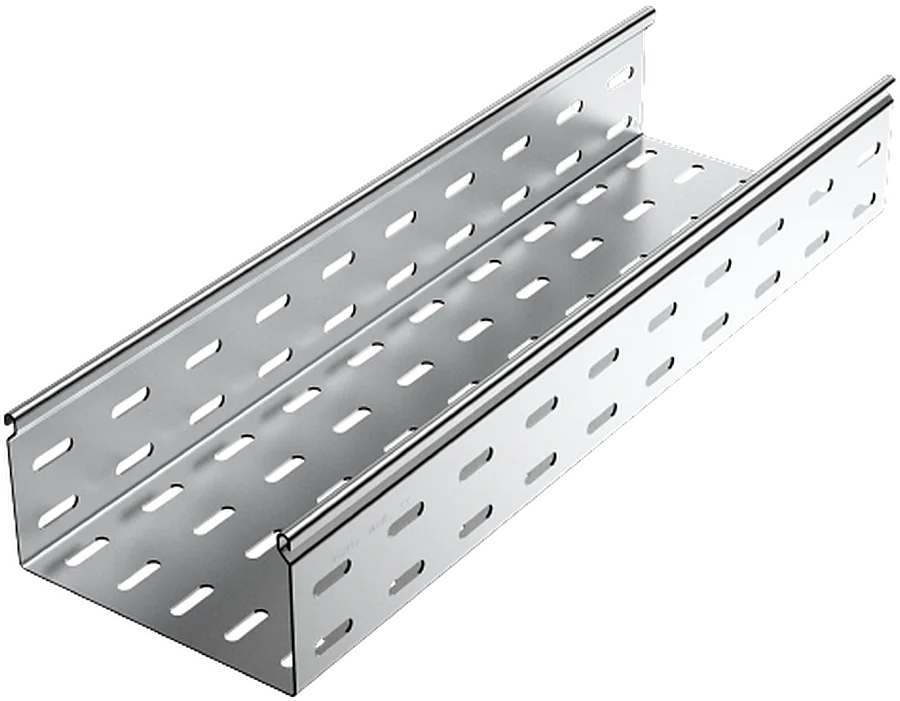
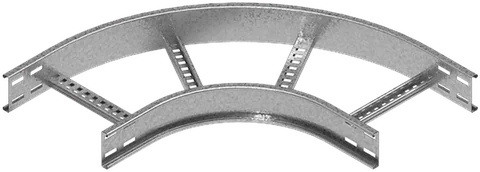
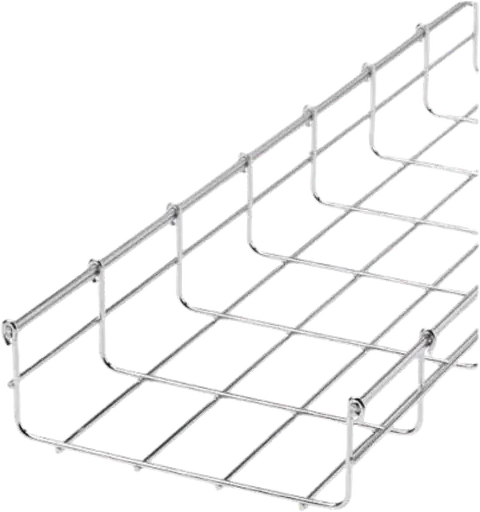
| Perforated | Ladder | Wire mesh | |
|---|---|---|---|
| Construction | Formed sheet with a slotted base and side flanges | Two side rails joined by rungs | Welded wire grid bent into a U |
| Load and span | Light to heavy, set by sheet thickness and height; moderate spans | Highest; built for long spans | Light; shorter spans, typically 1.5–2.0 m support spacing |
| Ventilation | Good — slots in the base | Best — open between rungs | Open on all sides |
| Cable support | Continuous base for small and flexible cables; easy to tie | Cables rest on rungs; suits large, stiff power cables | Mesh supports light cables; they can leave the tray anywhere |
| Typical sites | Buildings, hospitals, pharma, data centres, utility areas | Pipe racks, substations, refineries, power plants, risers | Data halls, IT and telecom rooms, instrumentation, food plants |
Where cables need full enclosure — dusty areas, exposed runs, sensitive circuits — use box type trunking with a removable cover instead.
Pioneer sizes at a glance
| Type | Widths | Heights | Lengths | Sheet / wire |
|---|---|---|---|---|
| Perforated | 25–1200 mm | 15–400 mm | 2500 mm; 3000 mm on request | 1.2–3.0 mm |
| Ladder | 25–1250 mm | 15–400 mm | 2500 mm; 3000 mm on request | 1.2–3.0 mm |
| Wire mesh | 50–600 mm | 50–150 mm | 2500 and 3000 mm | 3–6 mm wire, 50 × 100 mm mesh |
Materials and finishes compared
| Material | Environment | Corrosion resistance | Typical use |
|---|---|---|---|
| Pre-galvanised GI | Indoor, dry | Moderate; cut edges unprotected | Buildings, offices, electrical rooms |
| Hot-dip galvanised | Outdoor and industrial | Good; thick zinc on every surface | Refineries, substations, pipe racks, solar plants |
| Powder coated | Indoor, dry | Good while the coat is intact | Colour-coded services, visible runs |
| SS 304 | Wet indoor, wash-down | High, but not for chlorides | Food, pharma, wet areas |
| SS 316L | Coastal, chemical | Very high; resists chlorides | Marine-facing and chemical plants |
| Aluminium | Where weight and corrosion both matter | Good in most atmospheres; avoid strong alkalis | Rooftops, retrofits, single-core cable runs |
| FRP | Acid, alkali and salt exposure | Excellent chemical resistance; non-conductive | Chemical, fertiliser, effluent and coastal plants |
More detail: HDG cable trays, SS 316L cable trays, aluminium cable trays, FRP trays.
How to choose in four questions
- What cables? Large single-core and armoured power cables go on ladder. Mixed power and control go on perforated. Fibre, copper data and instrument cables go in wire mesh.
- What span? The structure usually fixes the support spacing. Choose the tray, height and thickness that carry your cable load at that span — ask for the safe working load at that span, not just a width.
- What environment? Use the material table above. Fittings, covers and couplers must be in the same finish as the tray.
- What standard? IEC 61537:2023 or BS EN 61537 on international and UK-led specifications, NEMA VE 1 and UL on US-format projects. All three tray types are tested under the same standards.
Each of our product pages carries copy-ready BOQ clauses: perforated, ladder and wire mesh.
Why Pioneer
Because Pioneer makes all three tray types and every common finish in one plant, we have no reason to push one over another — we recommend what suits your cables and site.
- UL certified cable trays, declared to IEC 61537:2023 and load tested for NEMA VE 1.
- Tested at an NABL-accredited laboratory — load–deflection, zinc coating, salt spray, tensile and chemical reports are published as a PDF.
- Manufacturing since 1994 at our own plant in Pirangut, Pune, which turns out up to 8,000 metres of tray a day.
- Supply across India by road from Pune, and export FOB Nhava Sheva (JNPT, Mumbai).
- Quotation within 24 hours of your BOQ, with the data sheet your consultant needs.